The ongoing transformation of the former Concord Naval Weapons Station into mixed-use commercial space, residential communities, and extensive public parkland is shifting the professional landscape of Concord, CA. Construction managers, site safety directors, municipal workers, healthcare personnel, and local educators working in and around this expanding corridor face evolving workplace safety standards. Whether fulfilling state licensing mandates or managing safety protocols on active development sites, earning a CPR certification ensures you can respond effectively during sudden medical crises.
Navigating certification requirements depends entirely on your specific job role and regulatory board. General workplace teams and site staff typically need basic CPR and First Aid credentials, while clinical providers require formal Basic Life Support credentials. Selecting a local, hands-on training program guarantees your certification card satisfies employer compliance rules without delaying your work schedule.
Key Takeaways:
Professionals around the redeveloped naval weapons site must choose training tailored to their field, ranging from general Heartsaver First Aid for workplace safety to BLS for clinical roles. California licensing boards and OSHA require verified, hands-on skills practice on physical mannikins rather than online-only certificates.
Aligning CPR Certification with Concord’s Growing Industry Sectors
As eastern Concord develops, workforce expansion spans multiple industries, each governed by distinct regulatory standards. Understanding which course your governing body accepts prevents common enrollment errors.
Healthcare and Clinical Personnel
Nurses, physicians, dental staff, EMTs, and clinical students working near John Muir Health or local outpatient clinics must maintain active BLS credentials. A standard BLS CPR Certification Course focuses on multi-rescuer resuscitation, chest compression fraction, bag-valve-mask ventilation, and automated external defibrillator (AED) integration.
Construction, Civil Engineering, and Field Operations
With large-scale infrastructure and environmental remediation projects underway near the former base, site supervisors and safety officers must meet OSHA guidelines. General workplace CPR and First Aid training focuses on emergency scene management, severe hemorrhage control, bone and joint stabilization, and heat stress management.
Education and Childcare Staff
Teachers and childcare providers in Contra Costa County are required to hold specialized certification covering child and infant CPR, choking relief, and emergency first aid. Confirming that your class meets California Emergency Medical Services Authority (EMSA) guidelines is essential before enrolling.
Understanding the Difference Between Online-Only and Hands-On Certification
A common point of confusion for busy professionals is whether an online CPR certificate satisfies employment standards. While web-based modules effectively teach theoretical concepts, major regulatory entities—including California OSHA, the Dental Board of California, and the California Board of Registered Nursing—strictly require an in-person physical skills evaluation.
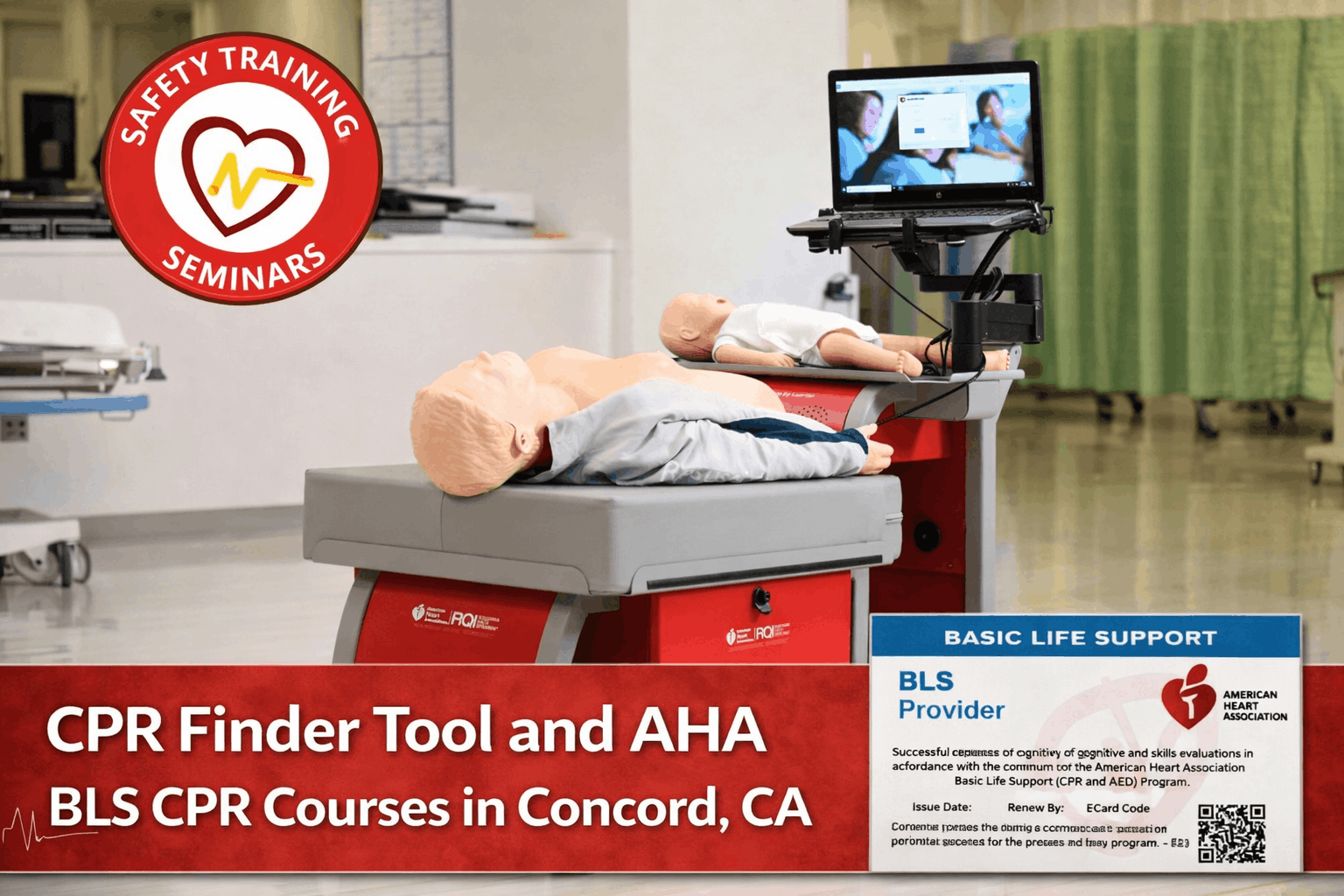
Hands-on instruction uses feedback mannikins that measure compression depth (2 to 2.4 inches for adults) and rate (100 to 120 compressions per minute). Practicing physical technique ensures muscle memory carries over to real-world emergencies, satisfying regulatory compliance and practical safety requirements.
Core Skills Covered in Local CPR and First Aid Training
Participating in structured training equips individuals to act systematically when an emergency occurs on a job site, in a classroom, or within the community.
1. High-Quality Chest Compressions
Compressions form the foundation of cardiac resuscitation. Trainees practice maintaining proper posture, straight arms, and full chest recoil to maximize blood flow to the brain and cardiac tissue during arrest.
2. Defibrillation via AED
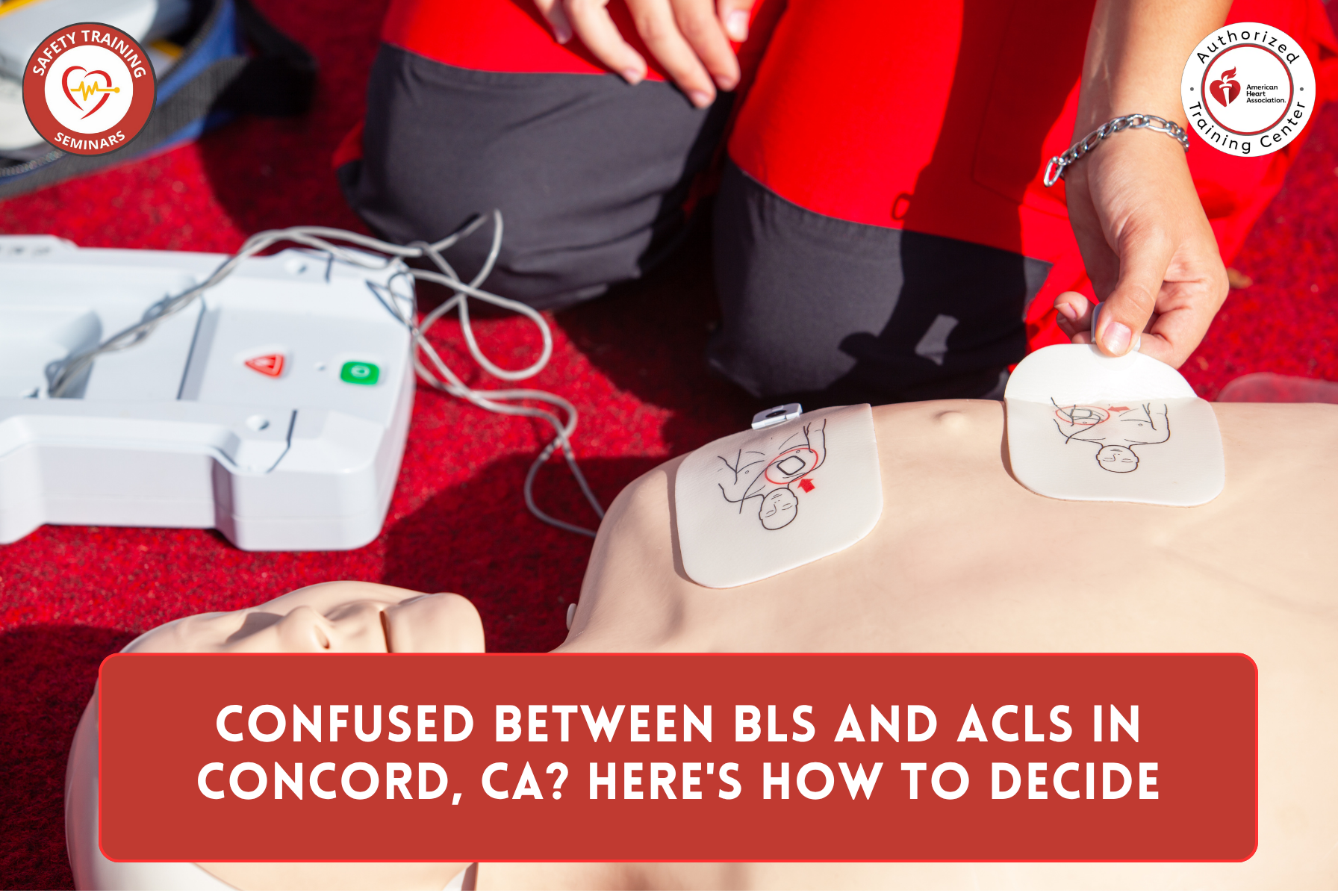
Automated External Defibrillators guide rescuers with visual and audible prompts. Classes cover pad positioning for adult and pediatric victims, clearing the patient during rhythm analysis, and delivering a shock safely.
3. Airway and Ventilation Management
Participants learn rescue breathing techniques using pocket masks and bag-valve-mask systems, ensuring adequate oxygenation without causing gastric inflation.
4. Severe Trauma and Environmental Response
First Aid modules address traumatic injuries, including using direct pressure and tourniquets to stop severe bleeding. Environmental safety modules cover heat exhaustion and heatstroke prevention, which are critical for outdoor workers during hot Contra Costa County summers.
CPR Certification Center for Concord and Central Contra Costa County
For professionals working near Treat Boulevard, Clayton Road, or the redevelopment corridor, Safety Training Seminars offers regular local course schedules for healthcare credentials and general workplace certifications.
Local Address:
Safety Training Seminars Concord Treat CPR Training Center , 4180 Treat Blvd, Suite A2, Concord, CA 94518
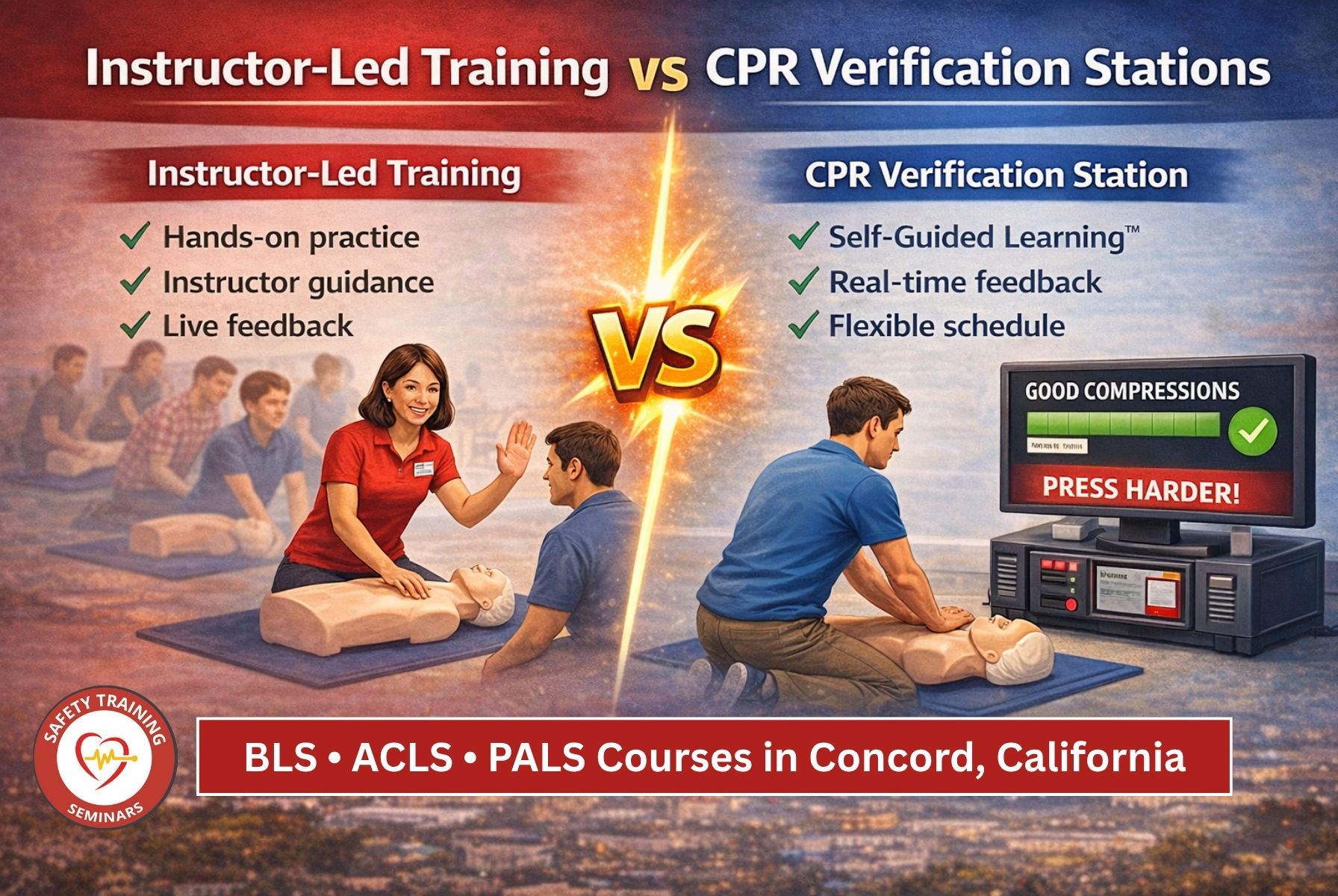
Located near central commercial access routes, this center serves students across Concord as well as surrounding communities, including Clayton, Lafayette, El Cerrito, and Hercules. Participants can choose between traditional instructor-led sessions or blended learning options, which allow you to complete online modules at home before attending a brief, hands-on skill verification in the classroom.
If you are a clinician looking to advance your emergency care credentials, you can explore options for ACLS certification in Concord or register for nearby PALS classes for healthcare professionals to satisfy hospital staff requirements. Furthermore, workplace teams looking to meet general safety mandates can enroll in local CPR and First Aid certification courses to prepare for emergency situations on site.
Frequently Asked Questions
Which CPR course do I need if I work on a redevelopment construction site in Concord?
Construction workers, site managers, and safety directors generally require a Heartsaver CPR AED and First Aid certification that complies with California OSHA standards. You should confirm specific site requirements with your safety compliance officer before registering.
Can nurses and nursing students use a general CPR card for clinical rotations?
No, healthcare facilities and nursing programs require a Basic Life Support (BLS) course designed specifically for healthcare providers. General community CPR cards do not cover team dynamics or advanced airway equipment needed for clinical environments.
How long does an official CPR certification remain active?
CPR and First Aid completion cards are valid for two years from the end of the month in which you passed the course. To avoid a lapse in credentials, plan to register for a renewal class approximately 30 to 60 days prior to your expiration date.
What should I bring to my hands-on skills session in Concord?
Bring a valid photo ID and, if you chose a blended learning course, your printed or digital online completion certificate. Wear comfortable clothing that allows you to move freely and practice skills on floor mannikins.
Do professionals commuting from nearby cities like Brentwood or Antioch have access to weekend classes?
Yes, weekend and evening sessions are regularly scheduled to accommodate shift workers, commuters, and field personnel traveling along Highway 4 and Ygnacio Valley Road.
Next Steps for Getting Certified in Concord
Maintaining an active CPR credential supports local safety standards and ensures compliance with California licensing bodies. To prepare for your upcoming training session:
- Verify Workplace Mandates: Check with your employer, licensing board, or academic department to determine whether you need BLS or general Heartsaver certification.
- Select a Flexible Format: Choose between a full classroom environment or a blended learning option that fits your work schedule.
- Complete Hands-On Verification: Attend your scheduled skill check to practice on physical mannikins and receive your official digital eCard.
Review the upcoming class calendar at Safety Training Seminars on Treat Boulevard to secure a time that aligns with your professional routine.