Finding the right CPR and First Aid certification class in Concord, California, is an essential step for healthcare professionals, workplace employees, educators, parents, and community members looking to gain life-saving emergency response skills. Whether your employer requires a course completion card, your school program mandates hands-on training, or you simply want to be prepared to help a family member, selecting the correct program ensures you receive the exact instruction you need. Located in the heart of Contra Costa County, Concord residents and nearby East Bay professionals have access to local training options designed to fit diverse professional schedules and learning preferences.
Where Can You Find CPR and First Aid Classes Near You In Concord, CA?
Locating a convenient training option in the East Bay area starts with identifying your specific educational requirements. Safety Training Seminars offers professional instruction designed to meet the needs of individuals and organizations throughout the region.
For residents seeking in-person instruction, the local training center is conveniently situated at the Safety Training Seminars Concord Treat CPR Training Center Address: 4180 Treat Blvd, Suite A2, Concord, CA 94518. This central location makes it easy for individuals living and working in Concord, as well as those traveling from neighboring communities such as Walnut Creek, Pleasant Hill, Martinez, and Clayton, to access hands-on learning environments equipped with modern manikin practice stations and up-to-date AED trainers.
What Does CPR and First Aid Training Cover?
Comprehensive training programs equip participants with the confidence and practical skills required to respond effectively during medical emergencies. While exact curriculum details depend on the specific program selected, standard courses typically cover:
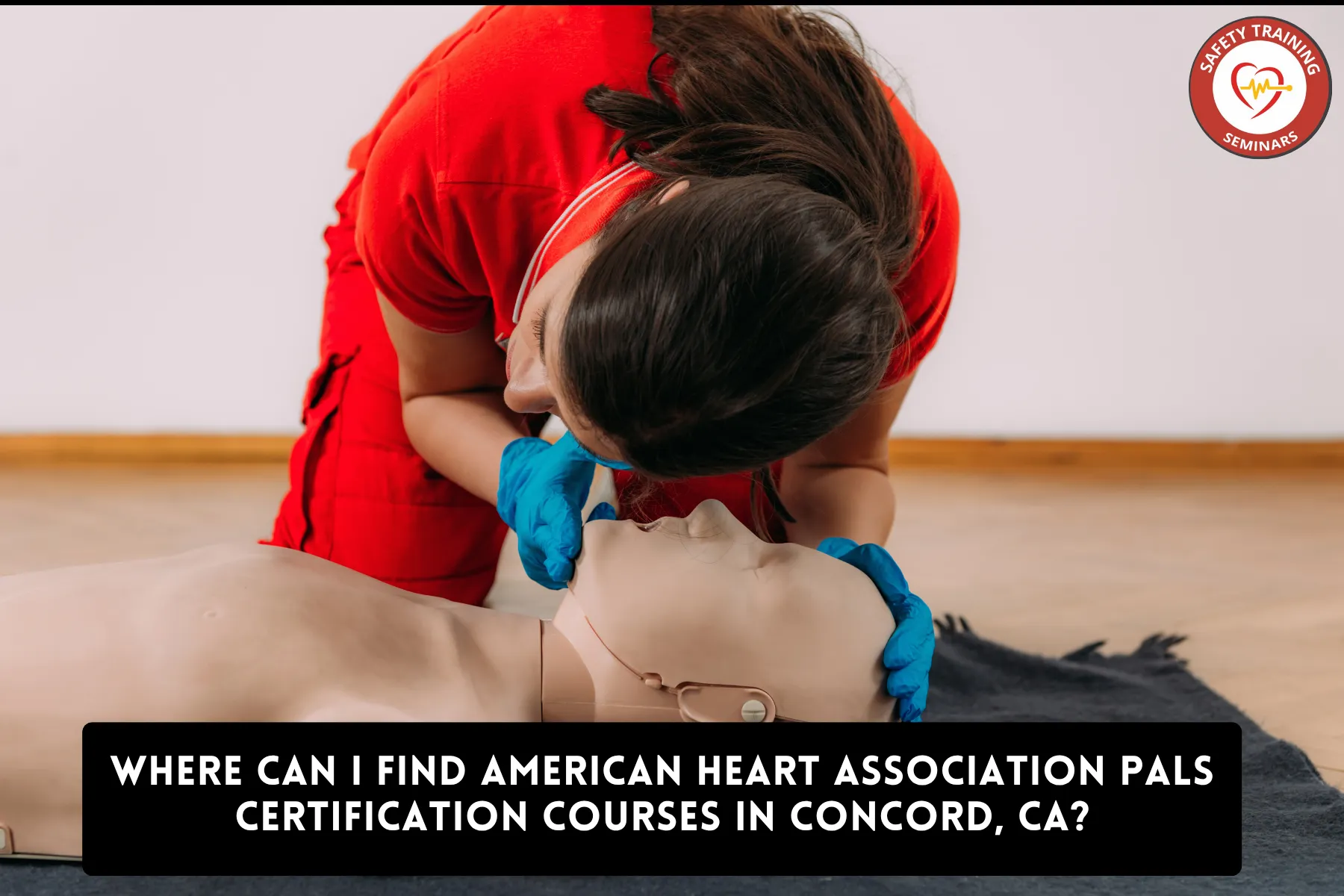
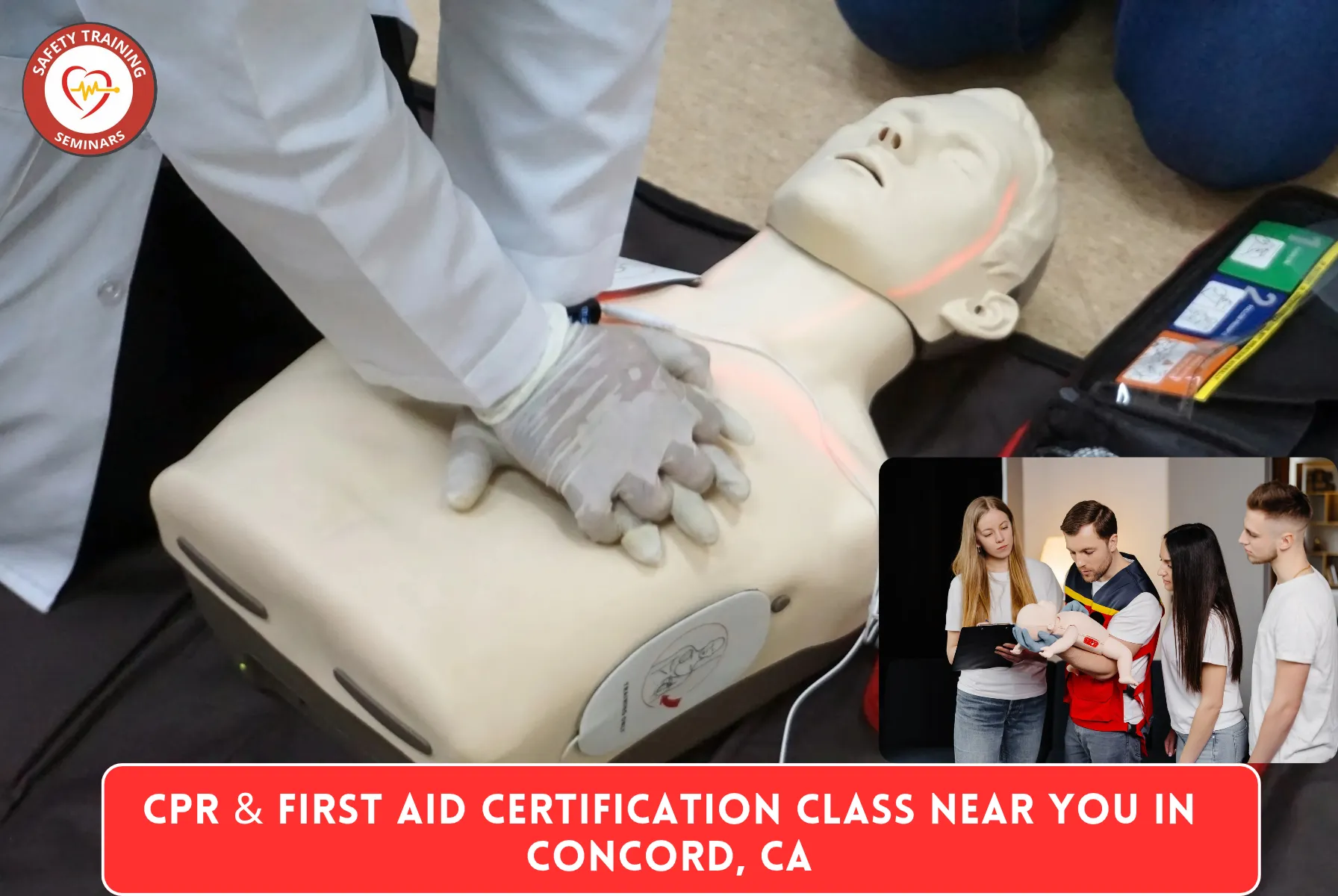
- Cardiopulmonary Resuscitation (CPR): Learning how to recognize sudden cardiac arrest, deliver high-quality chest compressions, and provide rescue breaths for adults, children, and infants.
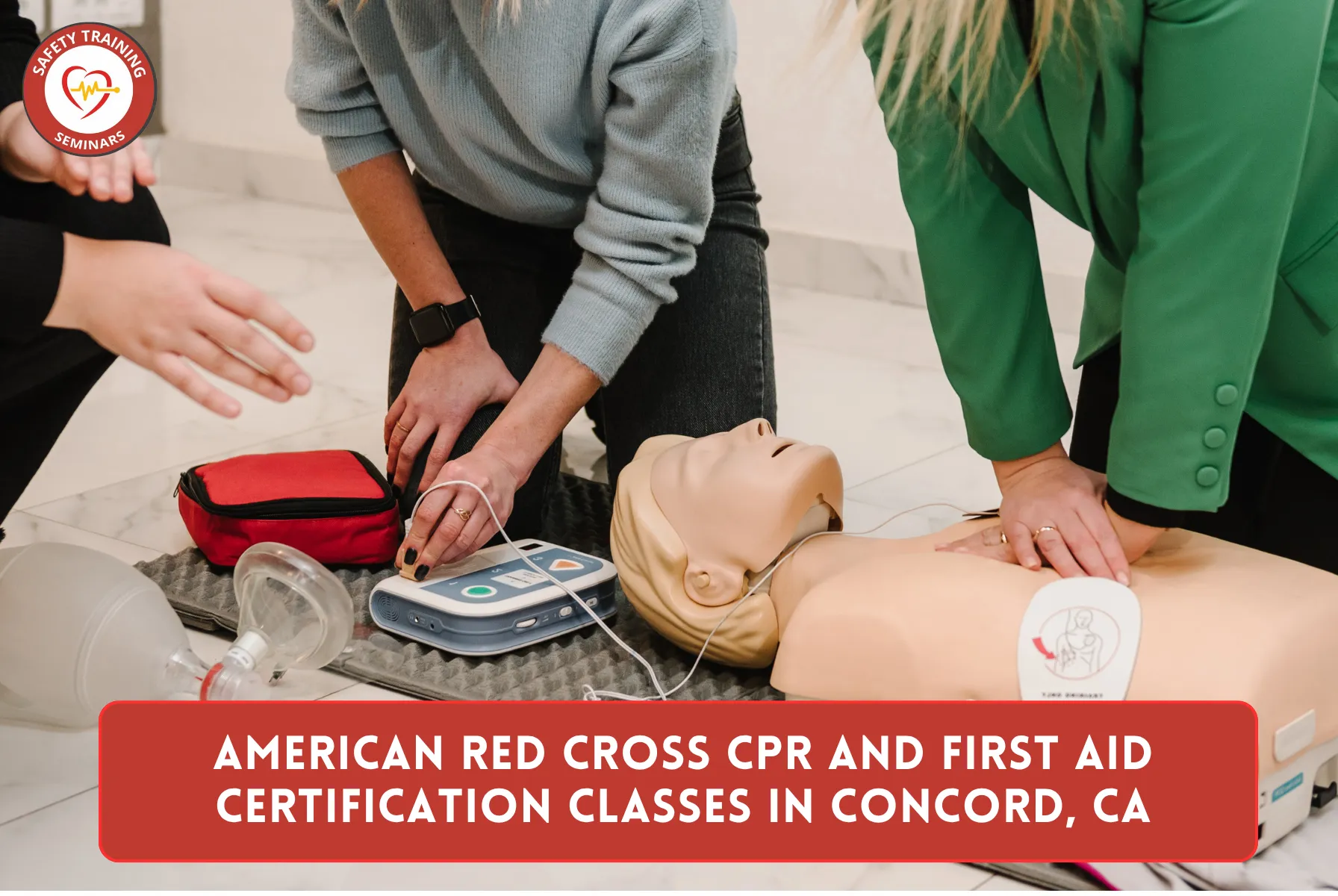
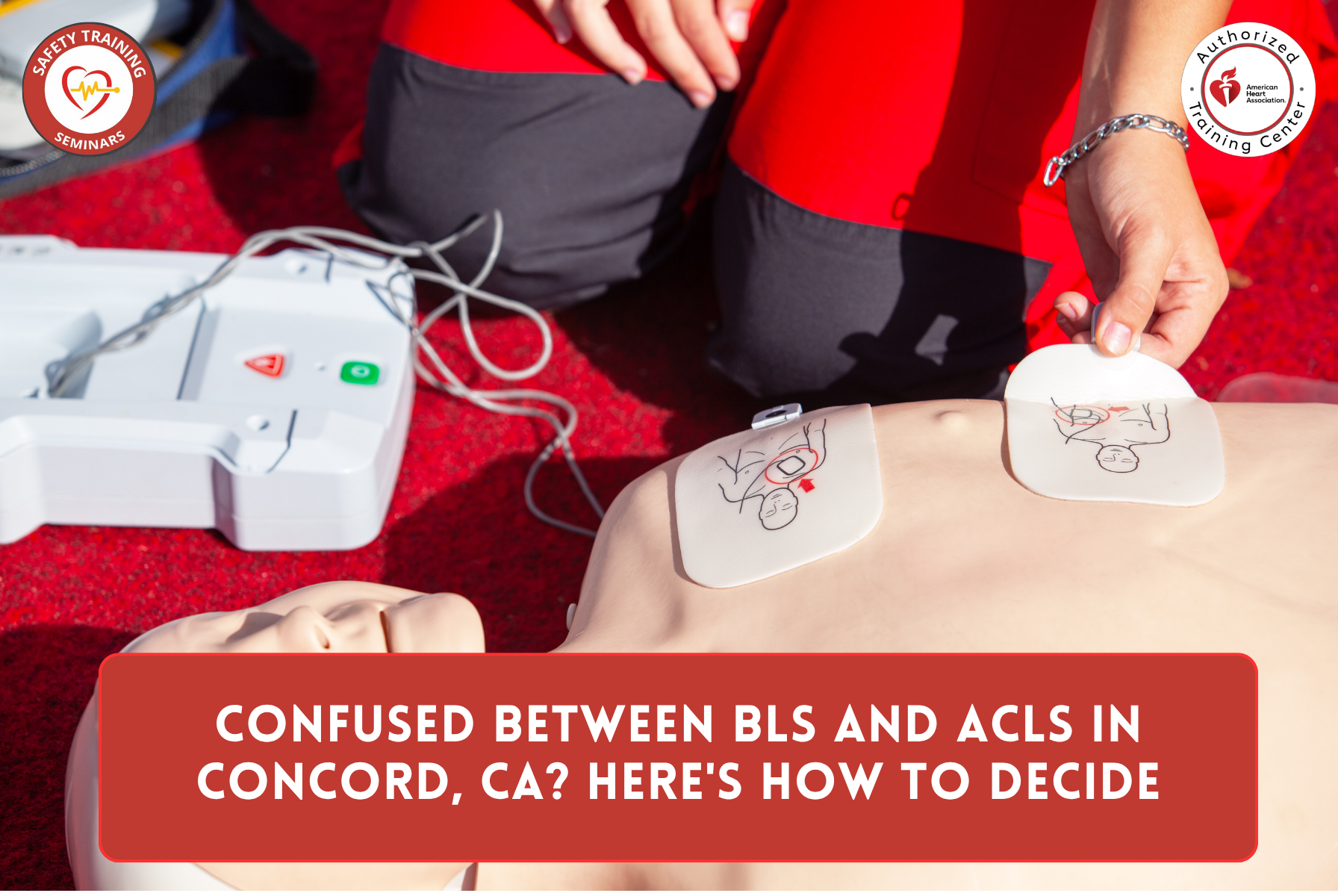
- Automated External Defibrillator (AED) Training: Understanding how to safely operate an AED, interpret visual and voice prompts, and integrate defibrillation promptly into rescue efforts.
- Choking Relief: Practicing effective abdominal thrusts and back blows to assist conscious and unconscious choking victims of all ages.
- First Aid Essentials: Managing common medical and traumatic emergencies, including severe bleeding control, allergic reactions, burns, bone and joint injuries, and sudden illnesses.
- Emergency Response Protocols: Assessing an emergency scene, prioritizing care, and communicating effectively with emergency medical services (EMS).
Because curriculum scopes vary, participants should always review the official course description prior to registration to ensure the topics covered match their exact goals.
CPR vs. CPR and First Aid vs. BLS: Which Course Do You Need?
Choosing the appropriate course depends on your professional responsibilities, workplace policies, or personal objectives. Selecting the right tier ensures your time is spent on the exact skills required by your organization.
| Course Type | Primary Audience | Key Topics Covered |
| General CPR & AED | General public, coaches, fitness trainers, and workplace employees | Adult, child, and infant CPR; AED operation; choking relief |
| CPR & First Aid | Childcare providers, teachers, foster parents, and workplace safety teams | CPR, AED operation, choking relief, and comprehensive First Aid skills |
| Healthcare Provider BLS | Nurses, medical assistants, EMTs, dental professionals, and healthcare students | Advanced single-rescuer and multi-rescuer CPR, bag-mask ventilation, and advanced AED use |
Healthcare employees, nursing students, and clinical trainees should always consult their employer or educational institution’s guidelines before selecting a class, as general CPR and First Aid courses do not automatically substitute for a healthcare-provider Basic Life Support (BLS) requirement.
Who Should Consider CPR and First Aid Training in Concord?
Emergency response skills benefit a wide range of individuals across the Concord community, including:
- Parents and Family Caregivers: Equipping households with the knowledge to respond swiftly to pediatric choking or household accidents.
- Teachers and Childcare Professionals: Meeting local school district, daycare, and state licensing expectations for infant, child, and adult safety training.
- Workplace Employees and Safety Coordinators: Fulfilling corporate safety compliance, OSHA recommendations, or general workplace preparedness goals.
- Fitness Instructors and Coaches: Ensuring athletic facilities, community pools, and youth sports programs maintain a prepared environment.
- Healthcare Workers and Students: Maintaining active credentials or fulfilling clinical placement prerequisites prior to entering hospitals, clinics, or dental offices.
Why Local CPR and First Aid Training Matters in Concord
Concord is a vibrant, active community encompassing residential neighborhoods, bustling commercial hubs, local schools, and recreational parks like Newhall Community Park and Lime Ridge Open Space. Everyday activities—from youth soccer matches at local fields to busy shifts in local retail centers and healthcare offices—happen alongside the inherent unpredictability of medical emergencies.
Having trained bystanders and employees ready to act before professional emergency responders arrive bridges a critical gap. Quick intervention during cardiac arrest or severe trauma significantly improves positive health outcomes, making community-wide education an invaluable local asset.
How to Choose the Right CPR and First Aid Class
When evaluating your options for training in the East Bay, consider the following practical criteria:
- Scope of Training: Determine whether you need CPR only, CPR combined with First Aid, or specialized healthcare provider training.
- Age-Specific Requirements: Confirm whether the curriculum includes adult, child, and infant techniques.
- Institutional Guidelines: Check with your employer, school administrator, or licensing agency to verify accepted course providers and required documentation.
- Learning Format: Decide if an instructor-led classroom session or a blended learning model (combining online coursework with hands-on skills verification) best fits your schedule.
- Location and Logistics: Ensure the training facility is easy to commute to and offers convenient scheduling options.
Taking time to confirm these details prevents registration errors and ensures your completed course fulfills your exact professional or personal requirements.
CPR and First Aid Training Options from Safety Training Seminars
Safety Training Seminars provides professional, structured training options for individuals throughout Contra Costa County. Utilizing the Concord training center at 4180 Treat Blvd, Suite A2, participants benefit from structured environments facilitated by experienced instructors.
Depending on the specific course selected, programs may feature American Heart Association (AHA) curricula, ensuring participants receive standardized, evidence-based instruction. Upon successful completion of all cognitive and hands-on testing requirements, participants receive an official AHA Course Completion eCard. This digital credential provides quick, secure access to proof of completion for employers and regulatory bodies.
How to Register for a CPR and First Aid Class Near Concord
Securing your spot in an upcoming training session is straightforward:
- Identify Your Requirements: Review your employer, school, or personal objectives to determine the exact course type needed.
- Explore Available Classes: Browse current course schedules for CPR and First Aid certification classes in Concord to find a date and time that matches your availability.
- Review Course Details: Double-check the course prerequisites, location details, and fees.
- Complete Registration: Follow the online registration steps to reserve your seat at the local training center.
- Attend and Complete: Participate in the classroom instruction and hands-on skills practice to earn your completion documentation.
Explore available sessions and review enrollment details today by visiting CPR and First Aid certification classes in Concord.
Frequently Asked Questions About CPR and First Aid Classes in Concord, CA
Where can I find a CPR and First Aid certification class in Concord, CA?
You can find local, in-person classes at dedicated training facilities such as the Safety Training Seminars Concord center located at 4180 Treat Blvd, Suite A2. These sessions provide the hands-on practice required to master chest compressions, AED use, and first aid techniques.
What is the difference between CPR training and CPR and First Aid training?
General CPR training focuses primarily on responding to cardiac arrest emergencies through chest compressions, rescue breaths, and AED operation. CPR and First Aid training expands upon this foundation by adding instruction on how to treat sudden illnesses, bleeding, burns, and other common injuries.
Do healthcare professionals need BLS instead of a general CPR and First Aid course?
Yes. Most nurses, doctors, EMTs, and healthcare students are required to complete an American Heart Association Basic Life Support (BLS) Provider course rather than a general public CPR and First Aid class. Always verify your specific institutional requirements before enrolling.
How do I know whether a course meets my employer’s requirements?
Check your employee handbook, human resources department, or professional licensing board guidelines. Look for specifications regarding American Heart Association (AHA) approval, hands-on skills checks, and whether a course completion eCard is mandated.
What documentation do I receive after successfully completing the course?
Upon successfully passing both the written evaluation (where applicable) and the hands-on skills assessment, participants receive an official AHA Course Completion eCard, which can be viewed, saved, and shared digitally with employers.
Find the Right CPR and First Aid Training Near Concord
Securing life-saving emergency skills empowers you to respond calmly and effectively when seconds matter most. By choosing a program tailored to your professional or personal goals, you ensure your time and effort deliver practical, reliable results.
Review your specific training prerequisites and explore upcoming schedules to find the right Concord CPR and First Aid course options to fit your schedule.